



When I wrote “Investing for Beginners” (101 and 201) and “Investing 301”, I said “In the alternative sectors, (which I’ll write about in Investing 401 - wait for it…) gold and Bitcoin are inflation hedges, although Bitcoin is the newcomer and unproven - so I’m keeping my allocation down to about 1%.”
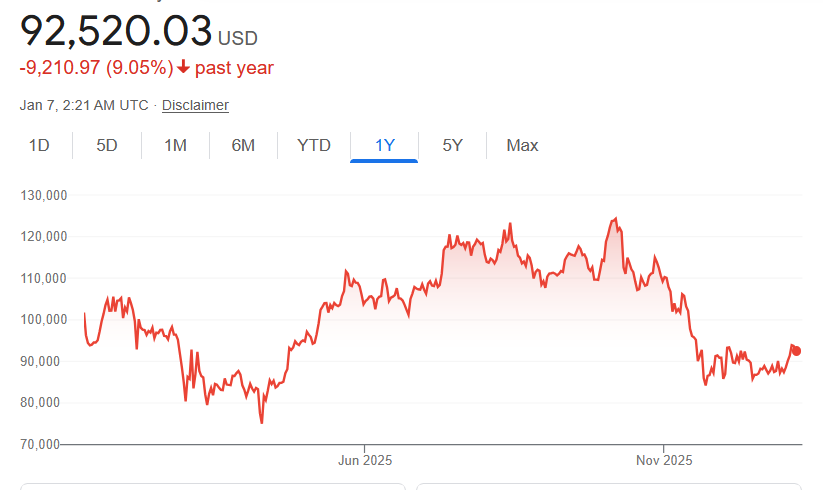
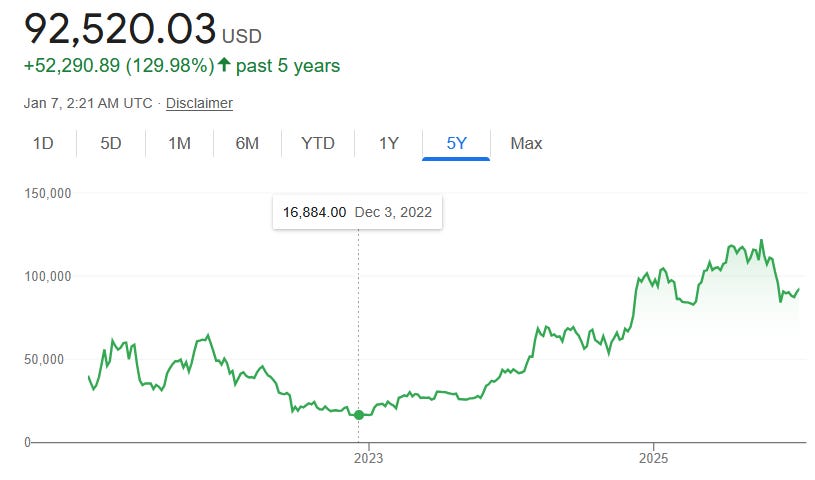
Well, of course, that turned out to be too conservative, since Bitcoin has really gone up since then, when it was about $40,000 - now it’s been running between 111,000 and 124,000. Fortunately, when crypto started rising, I allocated more, not just in Bitcoin, but also Ethereum, and now it’s closer to 5% of my total investments.
The thing we have to remember is that it is God who gives us the ability to get wealth, and if and whenever we prosper, we should always give him the glory.
“But remember the Lord your God, for it is he who gives you the ability to produce wealth…” Deuteronomy 8:18
alternative investments that I’ve lost money on
I was pretty excited about the idea of the ‘little guy’ (including myself) being able to invest in things that were formerly out of reach. Digital investing has made that possible. Real estate, for example, is way too expensive for any but wealthy, experienced investors. But now you can invest in large commercial projects by just buying a little piece of them, for as little as $10 in some cases. More on that later.
I had always heard that big investors also diversify by holding some art, which supposedly is a good inflation hedge. So I bought some shares through ‘Masterworks’. I reviewed the art works they had available, picked out a few, and bought shares in them. I knew these were long term investments, and not very liquid at all, but really didn’t expect them to go down in today’s inflationary environment. So the other day I took a look at how much I could sell them for, and got quite a shock. The valuations were down over 40%!. How could that be? I don’t know, but I don’t like it. Some inflation hedge. I’m in the process of selling one as a test to see if I actually get some cash back or if it’s a scam. update 1/6/26 - it’s not a scam - I was able to sell one of the “masterpieces” - at a 40% loss. It’s done by a digital auction, and I was allowed to let it go at ‘market’, or I could have set a price limit. I let it go -just to see if 1) I would actually receive a check, and 2) to see what price someone would actually pay.
Same thing for a project called ‘RallyRoad’. I thought it was fun to buy a $50 share in a classic Corvette, thinking classic cars were good investments. Wrong, at least in partial shares, in this company. The valuation, which is important if you want to put your shares up for auction, is down about 25%. That’s terrible. update - a couple months ago I told rally road that I want to sell my share in the Corvette in their auction procedure - no response. Beware.
The other area that hasn’t worked out well is startups - kind of a ‘shark tank’ investment for the little guy. Again, I knew that startups often don’t make it, and that it’s long term, but by spreading out small investments ($100-$150) in about 10 new companies, the hope is that one of them will make it good and more than pay for losses on the other 9. That’s the theory, anyway. But when interest rates started going up, it became much harder for small companies to raise cash to grow their business. I did have one that got bought out, and made a small profit, but hardly enough to make up for the others. All I’m hearing from the others is silence, so I have to assume they’re struggling. Since they’re not big enough to be on the stock market, their financials are private.
All 3 of the above examples - art, collectibles, and startups, raise capital by crowd-funding and selling shares that are not secured or marketable. The only way to profit is if they get bought out or are able to open on the stock market, making your shares worth cash, hopefully at a much higher price than you bought in at.
what IS working
Real estate crowd funding. I can vouch for Groundfloor. You can usually invest as little as $100 in a loan to a contractor, secured by a mortgage on real estate that they intend to fix up and re-sell. These are short term, typically about 12 months. Groundfloor handles everything. In case of a default, they would foreclose if necessary. The interest rates are anywhere from 8-12% depending on Groundfloor’s estimate of the risk. Each borrower has to be approved by Groundfloor and has to have ‘skin in the game’. I’ve completed about a dozen of these type loans, and every one has been repaid, with the agreed-upon interest. There were a couple that took a few extra months, but I was paid interest for the wait. I’ve also withdrawn cash from time to time, and the money was electronically deposited directly to my bank, with no problems.
Two larger investments seem to be working well - both also in real estate. One is Fundrise and the other is Equity Multiple. With crowdfunding, I’m in residential high end apartment complexes. (NOT office space or shopping malls!) I receive a portion of the rents every quarter, and it’s a nice income, about 4% on my investment, and it’s completely passive; I don’t have to do any of the management. Hopefully, and I can’t vouch for this yet, someday the apartments will either be sold for a nice profit, or vested to the point where another investor would buy me out if I or my estate wanted the cash.
conclusion
It’s been an interesting learning experience, and I’ve really tried out a lot of unusual ideas. But the old standbys are hard to beat. Gold and silver have been stores of wealth since Adam and Eve.
10 A river watering the garden flowed from Eden; from there it was separated into four headwaters. 11 The name of the first is the Pishon; it winds through the entire land of Havilah, where there is gold. 12 (The gold of that land is good; aromatic resin and onyx are also there.) Genesis 2:10-12
You can buy gold coins, you can buy a gold ETF, you can buy stock in gold mines. Same with silver. They can go up and down in price, but they will never go to zero, which is possible with stocks, if a company goes bankrupt. Same with real estate. The land itself will never go to zero (as long as the earth remains).
These are considered ‘alternatives’ to stocks and bonds. Collectibles are fine, especially if it’s something you are really enjoy, like a classic car, or art that you really appreciate. But buying small shares through crowd funding opportunities hasn’t worked out for me, so I’m passing that on for what it’s worth.
Bitcoin’s future is still a little uncertain, but has certainly been profitable so far. Since it’s digital, and digital exchanges can be hacked, I think it’s very important to have a ‘hardware’ wallet that is safe and secure and offline. I use Coinbase for buying and selling, and Trezor for safe storage. It’s also imperative to keep an elaborate procedure for recovery if you lose your password, and I keep the instructions for that in my safe deposit box.
From this one year chart as of 1/6/26, you can see that BTC is volatile, but if you look at the 2nd chart, going back to Jan 2021, the overall trend has been up.
why I invest
Finally, I’ll wind this up with the reasons why I bother investing. One is to make more so I can give more. Bev and I delight in being able to help our extended family financially from time to time. We love to give, above and beyond the tithe to our local church, to causes that we feel strongly about, like Samaritan’s Purse, or Preborn, for example - and after we learned so much about Charlie Kirk, we added Turning Point USA.
And I’m also aware of Proverbs 13:22: “A good person leaves an inheritance for his grandchildren”.
I might do a piece soon on how my stock investing philosophy and methods have changed over the years, and what sectors I’m investing in now, and why and how. If I have time…
Technically I have some gold and silver ETFs in my IRA that I haven't yet sold, but I would be careful with paper metals. There is strong evidesuggesting there are way more paper claims than physical metals. So far they have managed to shuffle the claims and metals to cover claims, but at some point people will realize the shortage; everyone will try to convert to physical and we will get a worldwide game of musical chairs where more than half of investors will be left with nothing. It will proba6be the big, connected investors who win and the little guys will lose what little they have.
I really enjoyed your of your investments and good advice!